
Competition · Dec 2024 · Grainger Computing Innovation Prize
Smart Traffic AI
Third place in the Grainger Computing Innovation Prize. Variable speed limits from live traffic, weather, and crash history.
Smart Traffic AI media, 1 items. Use the arrow keys to move.
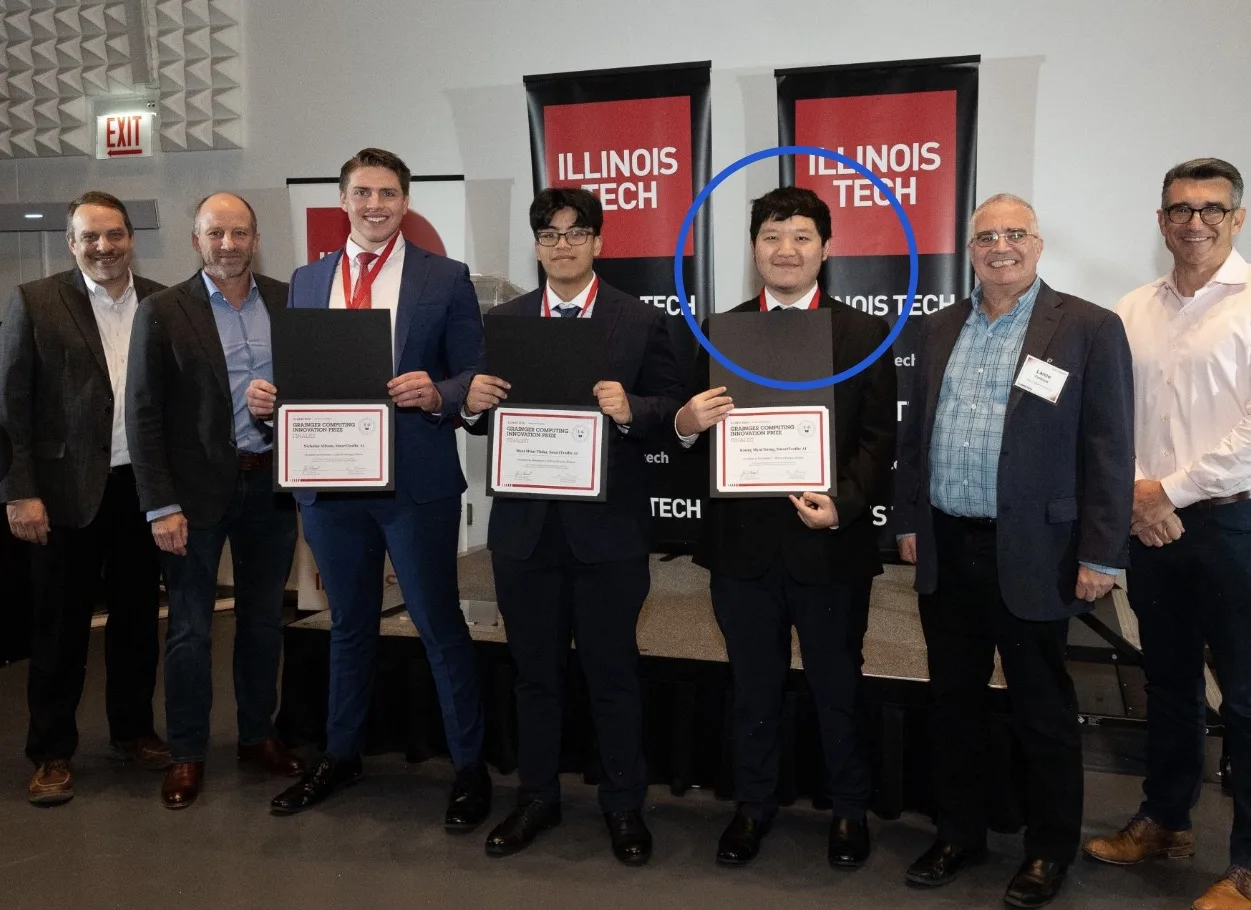
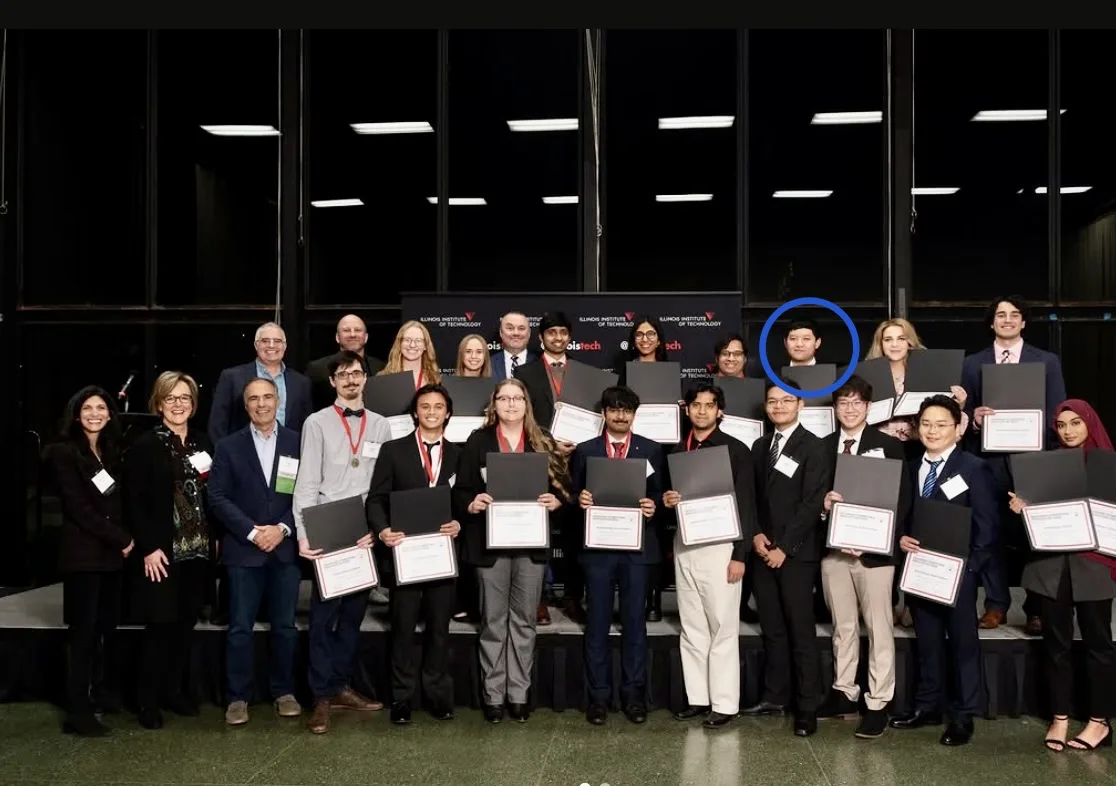
The Grainger prize group photo.
Smart Traffic AI is a variable speed limit. A number painted on a sign does not know about the storm that just started or the crash two miles ahead.
The problem
A fixed limit is a compromise that is wrong twice a day: too high for the weather you are actually in, too low for the empty road at a quiet hour. The situation is a roadway whose conditions move faster than the sign. The people it frustrates are the drivers in the jam and the people who maintain a road that keeps having the same kind of crash in the same kind of rain.
It was worth trying because the inputs already exist. Traffic density, weather, and historical crash reports are collected. They just do not meet in the number on the sign. The team built this for the Grainger Computing Innovation Prize. We took third place. The repository is private, so what I can say is what the project itself says.
How I built it
The model is a transformer over that live picture: density, weather, and the crash history, producing a speed limit that can change for that road. A transformer is there because the inputs are a sequence of conditions, not one row that a single threshold can settle. The limit is the output. The sign is what would have to move.
The same project uses GANs and Hugging Face alongside the transformer, with the usual Python stack around them: NumPy, pandas, and scikit-learn. I am not going to assign each library a scene it does not have in the write-up. They are part of the modeling work. The published features are the live read of traffic and weather, the transformer, and the use of weather and crash history in the same analysis.
Real-time is the requirement that makes the architecture matter. A limit computed tonight for tomorrow morning is the old sign with extra steps. The system is described as continuously reading the live traffic and the environment, then adjusting. That is the decision: the model runs on the feed, not on a yearly average.
Third place in the Grainger Computing Innovation Prize is the outcome the team can point at. It was a collaboration. I will not split the credit into roles the private repo is not here to support.
Challenges and what I learned
A variable limit is only a limit if the inputs are the ones on that road. Density without the weather is how you speed a road up into a storm. Crash history without the live density is how you slow a road for a crash that is not there today. The transformer is the piece that takes those together. The private repository is the other constraint: the claim stops where the project’s own description stops.
Highlights
- Third place, Grainger Computing Innovation Prize.